
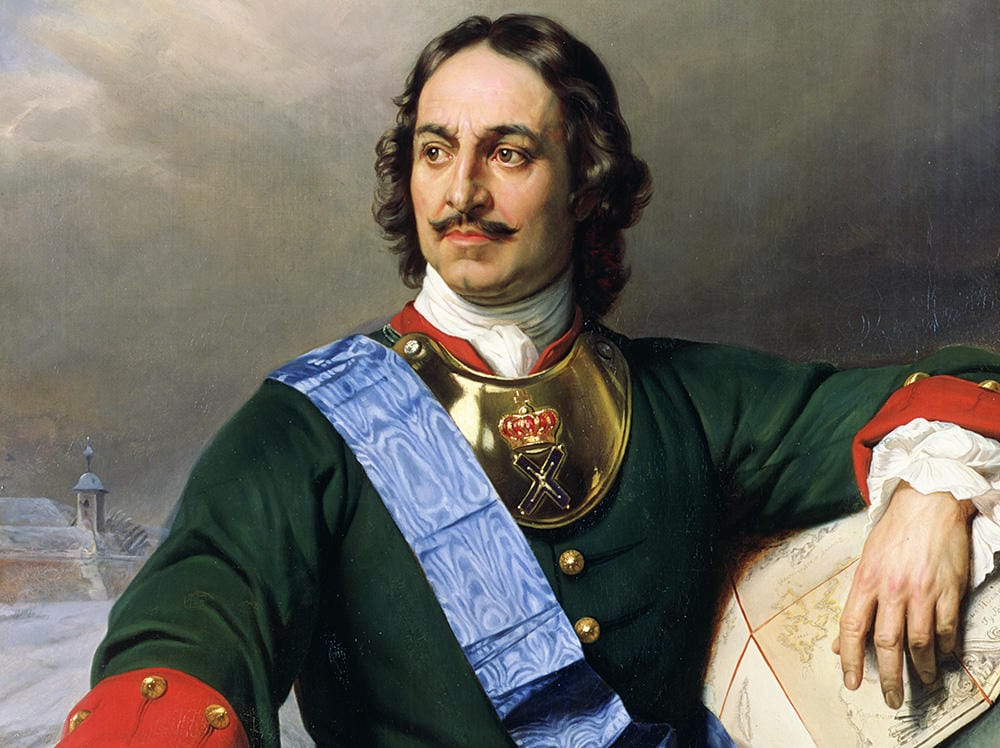
Few rulers in history have tried to drag an entire nation into the future by sheer force of personality, but Peter the Great did exactly that. That’s why he could secure a special place in history. Towering at over two meters tall, he cut an equally imposing figure in the story of Russia. When he came to power in the late 17th century, Russia was vast but technologically backward by European standards. Peter looked westward, saw shipyards, science, and modern armies, and decided his country would have them too, whether it liked it or not. His reign became a whirlwind of shipbuilding, beard-cutting, city-building, and the occasional dental extraction performed by the tsar himself.
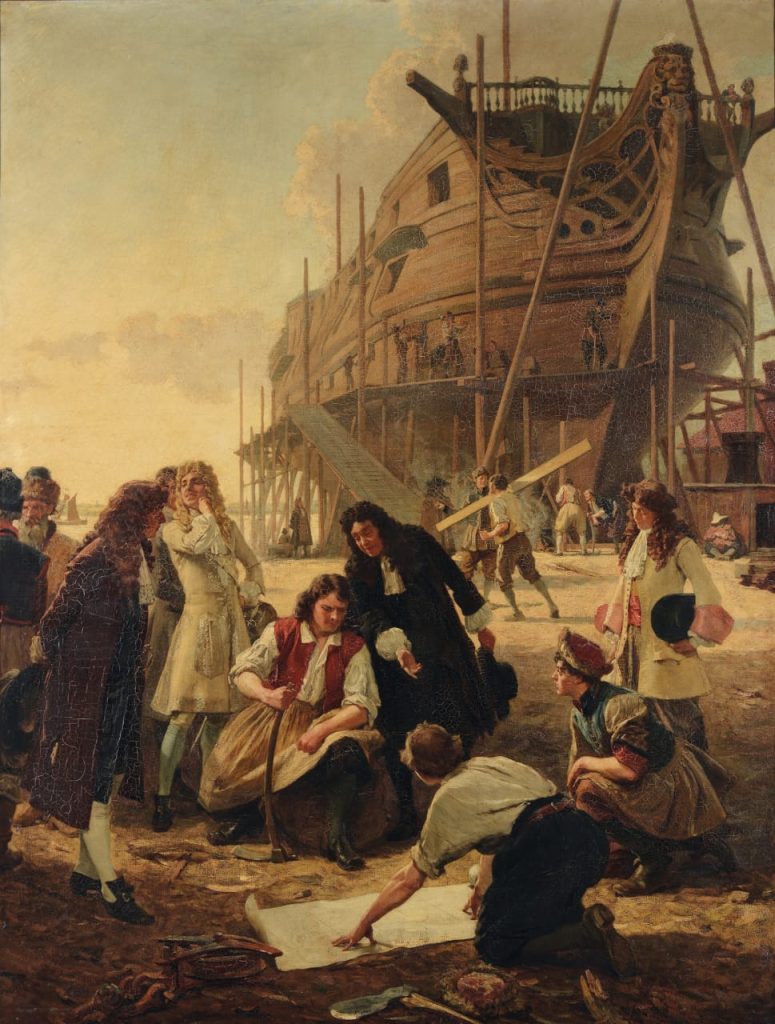
Peter’s obsession with learning was anything but royal in the traditional sense. Disguised as a common laborer, he traveled across Europe during the “Grand Embassy,” working in shipyards in the Dutch Republic and England. He didn’t just observe shipbuilding; he swung the hammer. This hands-on curiosity made him a ruler who could discuss naval architecture with craftsmen and artillery with soldiers. It also made him somewhat terrifying at dinner parties, where guests risked being drafted into impromptu anatomy lessons or having their teeth pulled if Peter wished to practice dentistry.
Back home, Peter launched reforms that were as dramatic as they were controversial. He taxed beards to push Russian men toward Western fashion, reorganized the army into a modern fighting force, and introduced new schools focused on science and engineering. He even changed the calendar and simplified the Russian alphabet. To Peter, modernization was not a gentle breeze but a hurricane with a clear destination: a Russia that could stand shoulder to shoulder with Europe’s great powers.
His most visible legacy rose from marshland at the edge of the Baltic Sea: the city of Saint Petersburg. Built at enormous human cost, it became Russia’s “window to the West.” Peter forced nobles to relocate there, ensuring his new capital would pulse with political and cultural life. The city’s grand avenues and canals were designed to rival Amsterdam and Venice, a deliberate statement that Russia had arrived on the European stage.
Yet Peter was a bundle of contradictions. He championed education but ruled with autocratic intensity. He loved science yet indulged in brutal punishments. He could be jovial, hosting riotous feasts, and moments later unleash a temper that made courtiers tremble. When he died in 1725, he left behind not just a larger empire but a reimagined one. Russia would never again be the isolated realm he inherited. Thanks to Peter’s restless energy, it had been thrust into the currents of global history, still paddling furiously in the direction he set.
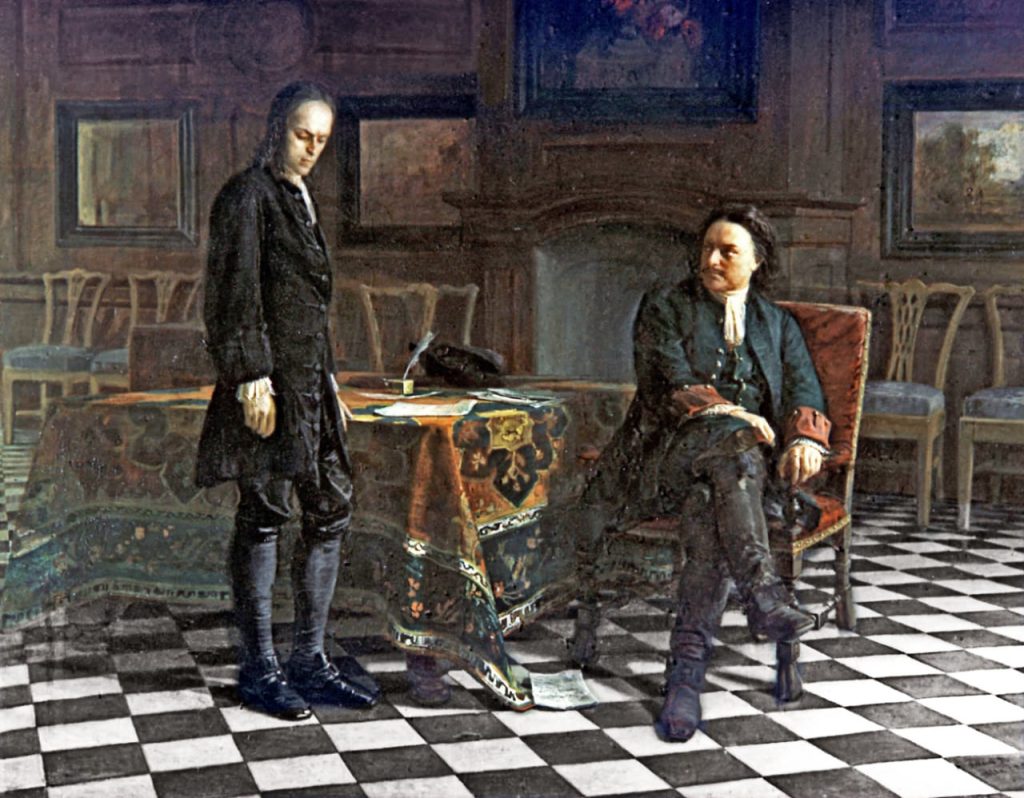
Perhaps the darkest chapter of his life unfolded within his own family. Peter’s son, Alexei Petrovich, resisted his father’s relentless reforms and longed for a more traditional Russia. Their conflict grew from political disagreement into personal tragedy. Accused of treason after fleeing abroad, Alexei was arrested, tortured, and ultimately died in prison in 1718, almost certainly as a result of the ordeal ordered by his own father. The episode casts a long shadow over Peter’s legacy, revealing a ruler who would sacrifice even blood ties for his vision of a transformed state. It is this unsettling fusion of brilliance and brutality that keeps Peter the Great lodged in history not merely as a modernizer, but as a force of nature in human form.
By: Rtr. Yeshani Nethmi


Leave a Reply